

The words ’88 days’ are always sure to stir up some pretty strong emotions within the heart and minds of any backpacker travelling Australia but for those outside of that community, it is probably isn’t something you have heard much about.
In order to qualify for a second year visa in Australia, 417 and 462 visa holders are required to complete 88 days (or three calendar months) of work in a regional area and depending on the country your from this can either be in agriculture, mining, construction or for those lucky Americans, hospitality.
The most common place to complete this work is on fruit and veg farms or cattle stations, so it is usually referred to as ‘farm work’. From underpayment to sexual harassment, there are no shortage of horror stories surrounding this work so for the most part, we were lucky to find great employers.
On backpacker groups you see hundreds of posts a day from people looking for farm work. It is very competitive and most people really struggle to find work, some claiming they have been ‘looking’ for months. We have worked for 4 different employers and yes, it was difficult to find however we have never needed to look for longer than 24 hours. For any struggling backpackers – top tips are at the end!
Peaches and Cherries – Orange, NSW
November to December 2018
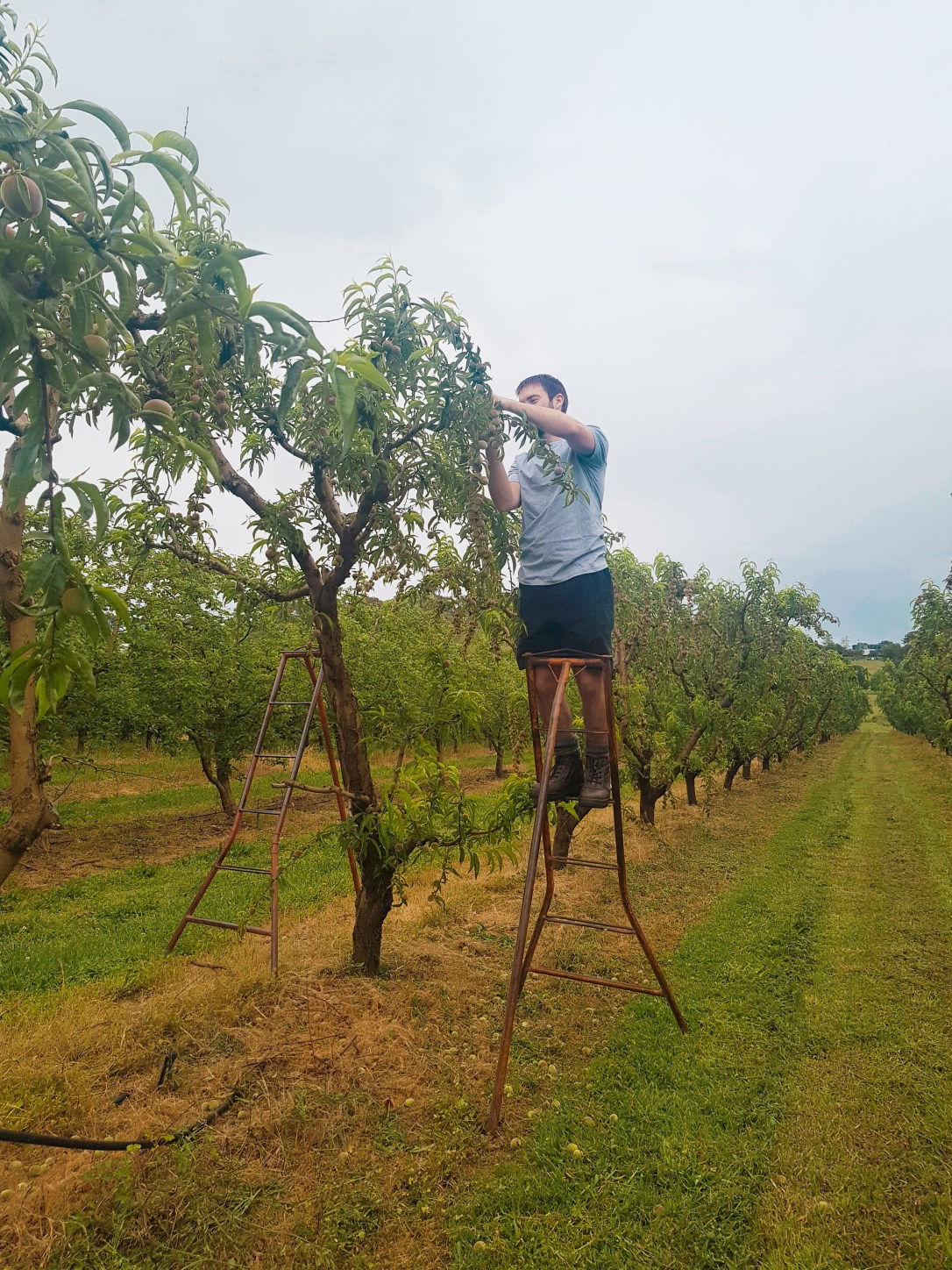
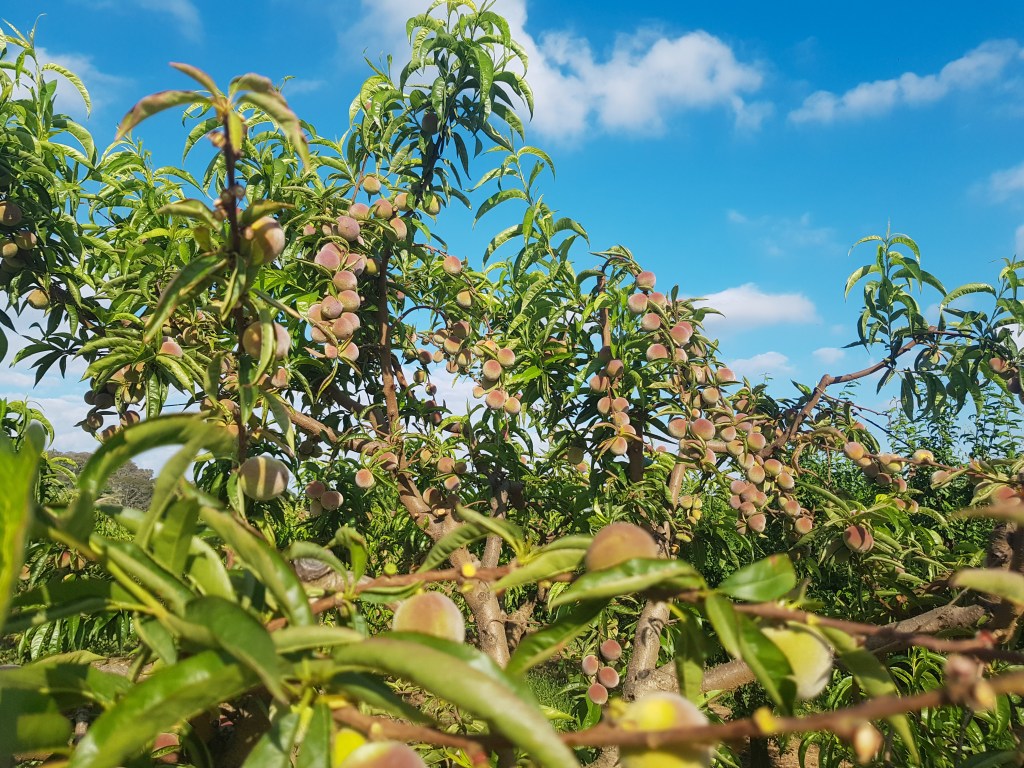
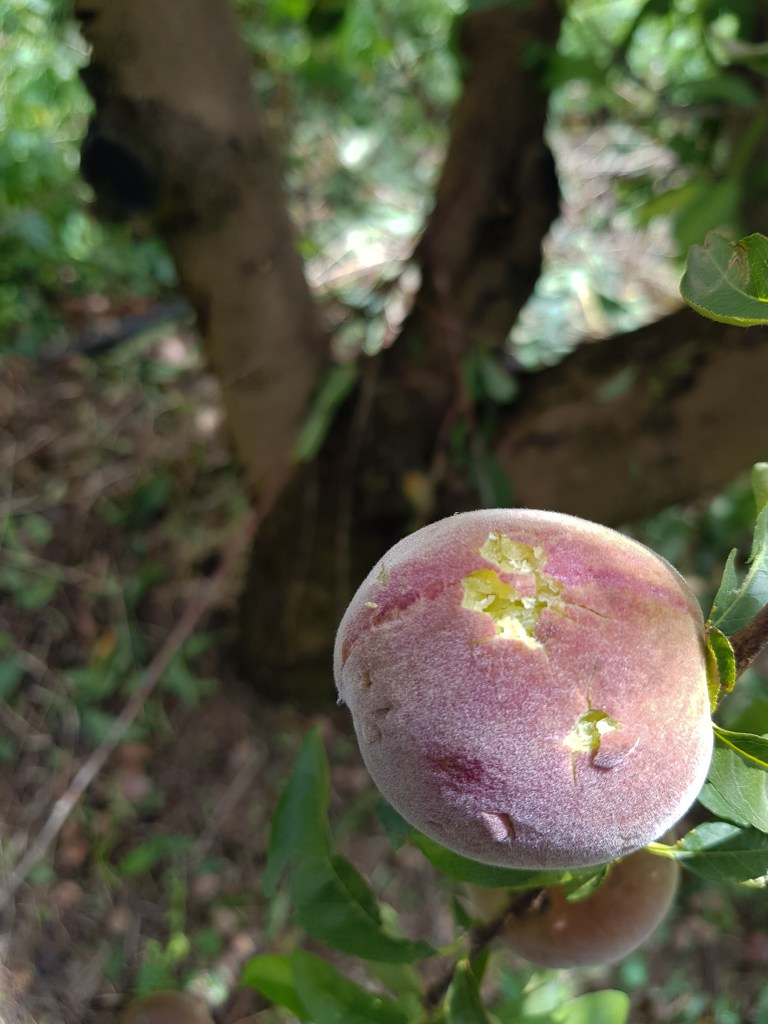
Our first job started with a 10 hour drive from Byron Bay to Orange, New South Wales. We arrived early Monday morning in our safety boots and sun hats, a little unsure what to expect. It was a small orchard and we would be thinning peaches for three weeks before the cherries were ready to pick. This basically means we had to remove more or less every other baby peach from the tree to make sure that the ones that were left had room to grow. It was easy work physically, but mentally draining! We passed the time by listening to podcasts (mainly true crime ones which made the farmer think we were a little deranged!). It was hourly paid though so we couldn’t complain.
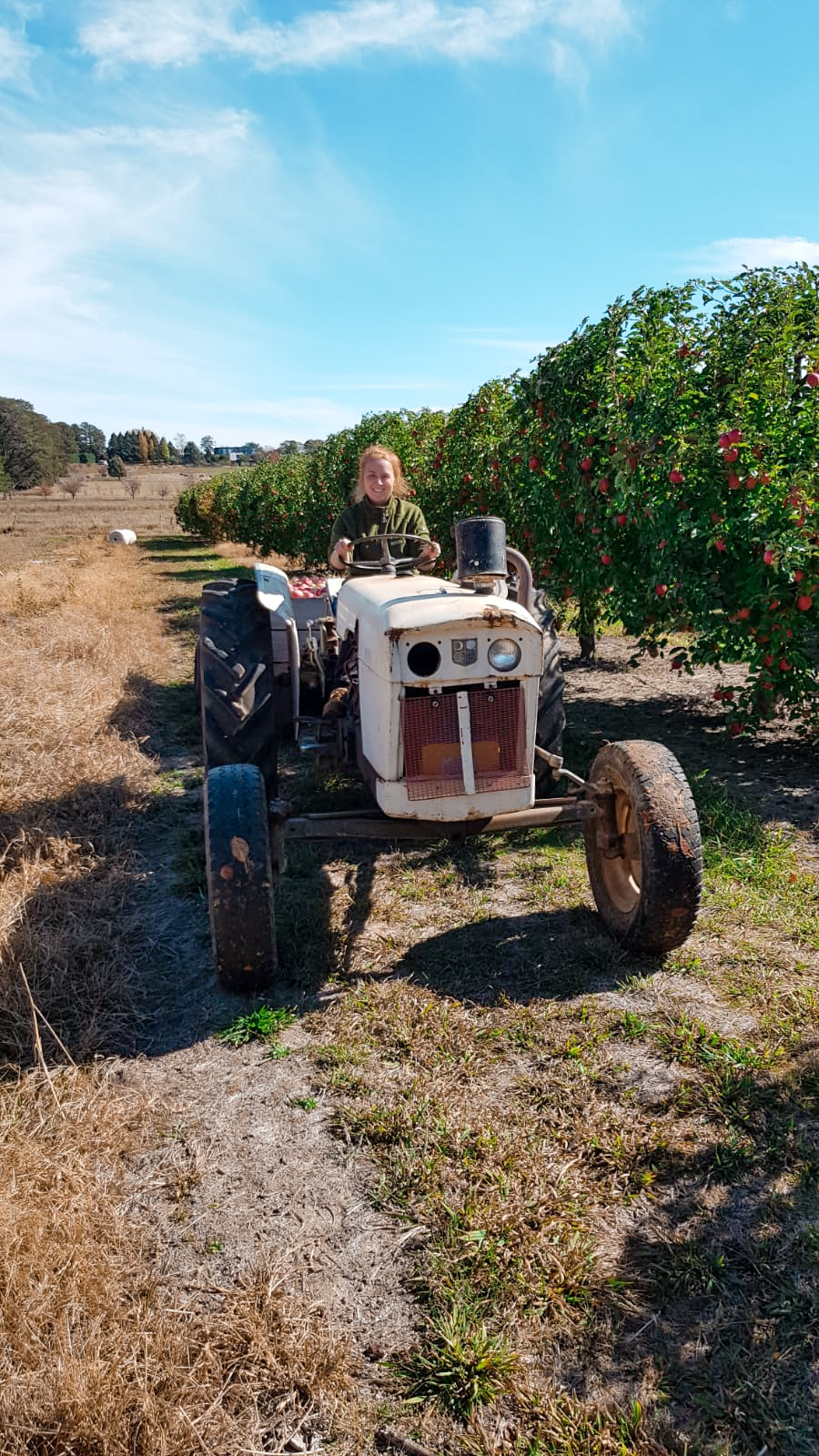
The farmer and his wife were getting a little older and had chosen to downsize their orchard so it was now a fraction of the size it once was. They were absolutely lovely and had two dogs, Rosie and Wendel (who of course were our new best friends). Whilst waiting for the cherry season to start, we also helped to lay some hail netting on the apples. This involved a tractor and a crazy big machine which stretched the netting over the top of the trees. This was the first time I got to drive the tractor which was awesome.
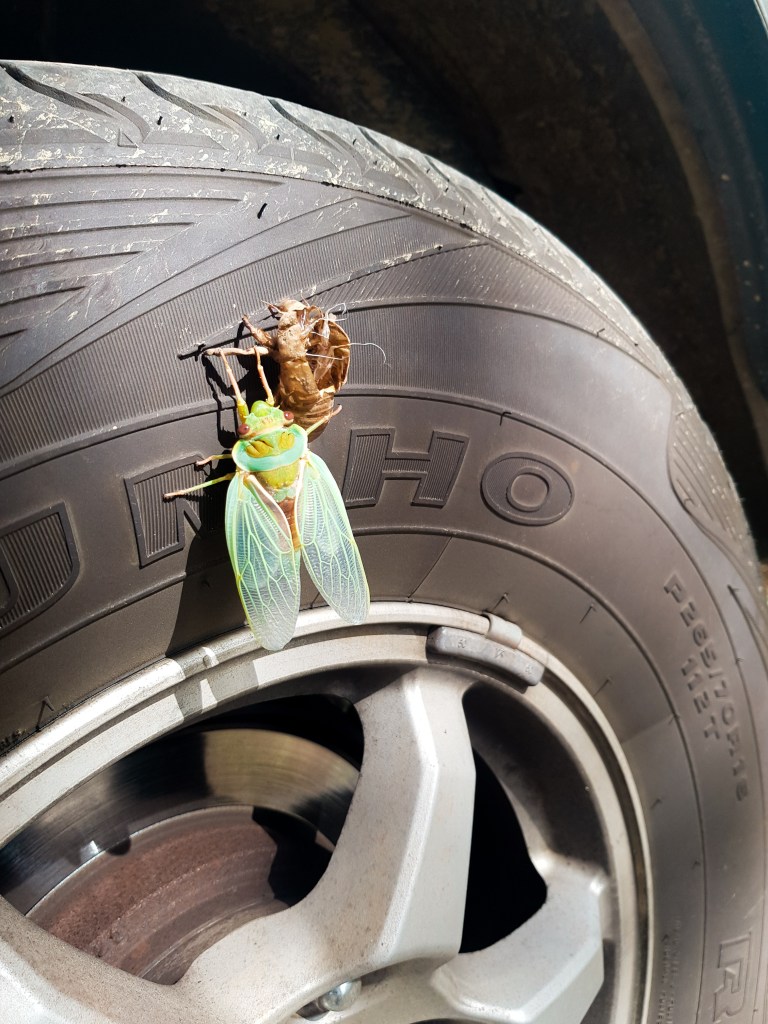
The worst part of the job was the cicadas! They are an evil insect with the loudest calls I have ever heard. If disturbed they will fly straight at you whilst screaming at full volume and if they decide to land on you they have the worlds stickiest feet and will not let go!
We were the only backpackers on the farm until the cherry season began. We started picking cherries early December and the temperature was heating up. We absolutely sucked and because it was paid by how much you picked, we were super poor! We did however get a few hours of packing in every other day in the sheds which was a welcome relief from the heat and hourly paid. We were joined on the farm by an American couple, then a week or so later by some more backpackers. Storms were forecast for the following week and as cherries split easily if they get wet, it was imperative we get them off as quickly as possible.
The night before we were due to leave for Sydney a huge hail storm hit Orange. When we think of hail in the UK it is usually pea sized. Hail in Australia is golf ball sized and unfortunately decimated the whole orchard. The entire crop of peaches we had spent 3 weeks tending to were ruined a long with the remaining cherries, all of the strawberries, the raspberries and plums. Any apples which weren’t covered by the hail netting we laid were also gone.
We were devastated for the farmer but his response was ‘that’s life’. The purpose of the 88 days is to provide much needed labour to regional areas of Australia which wouldn’t necessarily otherwise receive it but for us, it taught us a totally different way of life and attitude towards lifes obstacles.
Grapes – Beechworth, VIC
April 2019
After a stint of city life in Sydney, we headed down to rural North East Victoria to work on a kiwi farm. The work wasn’t due to start for another week but in a bid to make ourselves useful, we called around the local wineries to see if anyone needed any grapes picking. It was the end of the season but we managed to squeeze in 4 days picking for two different wineries.
If we could have done that for longer I think we would in a heartbeat. It was tough, hot work and ferrying heavy buckets down the aisles was not easy but it was such a relaxed environment that it made it all worth it.
We also received a couple of amazing bottles of wine for our trouble!
Kiwis – Bowmans Forest, VIC
April to May 2019
After 5 weeks packing kiwis, I would be happy if I never saw another again.
The job basically consisted of watching 10kg of kiwis roll down a conveyor belt into a box. When the box was full, I would pick it up, turn 180 degrees and put it down on a table. I would then replace the box and repeat the process on the other side. We weren’t allowed headphones as they were deemed a health and safety risk and you couldn’t hold a conversation with anyone because the machinery was just too loud. Basically you were left with the kiwis and your thoughts for 8 hours. I think by the end we had lost all social skills and were left mentally scarred!
Strawberries – Yackandandah, VIC
May 2019
Our only slightly dodgy experience. We were told that there would be 3 to 4 weeks work planting strawberries just a 40 minute drive from our previous job. We needed 3 weeks to qualify for our visa so this was perfect.
It was back breaking work and by the end of day 1 we were crippled but we turned up for day 2 like the troopers we are only to be sent home at 11am because they ran out of plants… There were around 5 fields and between the 8 or so of us working there, we had completed one and a third within a day and a halfs work. How was this going to last 3 weeks? Heavy rain was forecast for Wednesday and Thursday so we were told to be in on Friday with the view to work over the weekend to make up for lost time. That wasn’t a problem until Thursday at 4pm came and we were told not to bother coming in until Monday despite the forecast being fine.
We don’t like to back out on commitments however time was running out on my visa and we had to decide whether or not it was worth staying on the off chance it worked out or to go with our instincts and leave. We also had to consider that we had only worked 1.5 days that whole week and money was tight. We went with our guts but did try to do the right thing by going down to see the farmer personally to apologise.
On Monday we received a text from one of the fellow workers there to say that we had been replaced but they had also hired an extra 4 people on top meaning worked for a total 3.5 days after we left, making the grand total 5 days over two weeks. We 100% made the right decision to leave. I find it questionable for a farmer to promise 21-28 days work, knowing it will take much, much less especially when people travelled much further than we did to work there and that really isn’t fair.
Apples – Orange, NSW
May 2019
We were so relieved after the strawberry incident to find our first farm in Orange needed some help finishing off the apple picking season and they were nice enough to take us back.
We spent our final weeks picking the very apples we had laid hail netting over months before and doing some more tractor driving!
The visa application – Myth busting!
We had finally done it! It may have taken us more like 118 days, but we made it through and after a couple of hours at the library completing our applications, had our visas granted.
The way you count your days is confusing at best and there is so much misinformation flying around backpacker groups it is difficult to know what to believe. If you are a backpacker and struggling, the best thing to do is call immigration who will explain whatever you need but some of the biggest things we found were that –
Rumour – “In order to count your rest days, you must complete your full 88 days work for one employer in a continuous stretch”
Truth – As you can see above, we worked for multiple employers and broke our farm work up over the year. This is perfectly acceptable to do. As long as you work 5 or 6 days a week, you can count 2 or 1 days off (rest days) towards the total 88.
Rumour – “You have to work 35 hours per week to count your rest days”
Truth – You must work whatever is industry standard per week to count a 7 day week. In some industries, this can be much less than 35 hours. For example, grape picking is generally a much shorter day.
Rumour – “It was raining so I got sent home early and now I can’t count the day’
Truth – As long as you get paid for some work that day, you can count it. For example, if on Monday to Thursday you worked all day then on Friday you were sent home after an hour because it is raining, you can count the full 7 days, despite the fact your total hours for the week may be 6 or 7 hours less than usual. This applies for piece rate also. Just keep a note of exactly when you worked and how long for as you will need this info for the visa application.
If in doubt – CALL IMMIGRATION.
How we found work
It isn’t easy and takes dedication but here is my top tips on how we found work.
- Download the ’88 days to work app’. The app has some great information on what is in season (always check this out!) And also has the contact details for a lot of employers. Select an area and call all of the farms. If they don’t answer, write them an email. Make sure you keep a note of everywhere you have called. For the email, write a short cover letter in the body of the email. Don’t just say you want to complete your 88 days. Be a little original and write about what you personally hope to achieve through the experience. Include any relevant skills and experience. you may have. Attach your resume and a photograph of yourself. The photo may seem a bit of an alien concept, however your prospective employer probably isn’t going to meet with you for a face to face interview, so it may help them with their selection process. Make sure you include your contact details!
- Call the National Harvest line. This seems to be such an unknown service but it is a free number who connect farms with workers. They will talk you through the available vacancies within any area and pass on the farmers contact details to you. 1800 062 332
- Call the MADEC office in the area you are looking for work. They often have vacancies but you will need to go into their office for an induction.
- Talk to people!! It is amazing how many leads we have gotten on jobs just from talking to locals. If you’re in the area a while, join a sports team, go to the local pub, chat to the guy running the corner shop – every little helps.
- Visit the local tourist information centre. A couple we visited had lists of contact information for farms in the area.
- Gumtree ads do work. We didnt accept any jobs from them though we were offered two in this way. Make sure the ad is well written in a similar way to the email above.
- If you know a crop is coming into season and you don’t have any luck with the above get to the area and visit some farms. I wouldn’t recommend knocking on any house doors, but be smart and go to any farm shops etc and speak to the farmers.
The best advice I can give is that you need the farmer much more than he/she needs you and there are 100 backpackers lined up and ready to take your place. Be nice humans and work hard.
 Lauren Travels
Good Blog Lauren! Definitely helpful….
LikeLike
Thanks John! Much appreciated.
LikeLike
You have been busy, that was really interesting. Looking forward to your next one x x
LikeLike